The Caretaker's Badge: What Happens When a Club Callsign Changes Hands
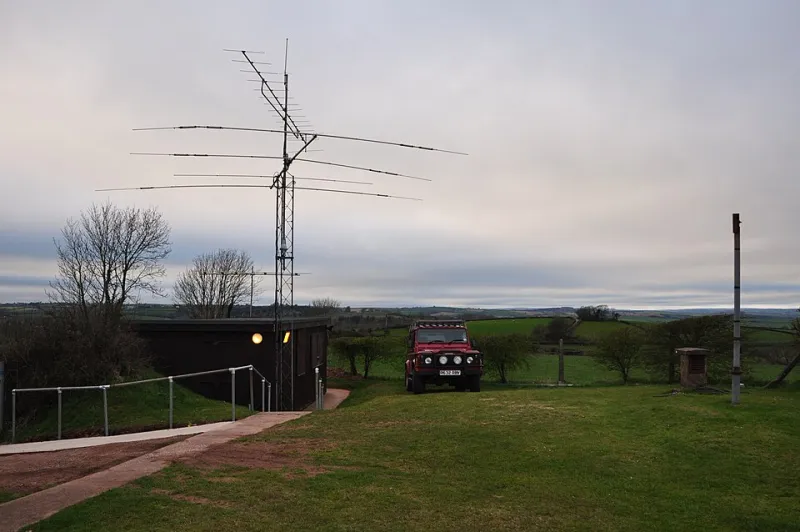
Photo: Lewis Clarke , CC BY-SA 2.0, via Wikimedia Commons
At a club night somewhere in the Midlands, a new member asks a perfectly reasonable question. Who actually owns the callsign? The room goes quiet. Someone says the club does. Someone else says the licence is in Dave's name. Dave, halfway through a custard cream, says he thought it had been transferred years ago. The banner on the wall has carried those letters since the 1980s, but the paperwork behind it is suddenly doing a lot less talking than the banner.
This is not a rare story. Across the UK, club callsigns are treated as fixed points in the radio calendar. They appear on trophies, on the side of the shack, in old logbooks and on the club's QSL cards. They feel like heritage. In practice, they are also administrative arrangements, and administrative arrangements need looking after by actual people.
The letters on the banner are not the whole story
A club callsign is a shared identity. It is the thing that lets a new member say, 'I was on with the club station last Tuesday' and be understood. It is the thread that runs through field days, slow Morse evenings and the annual rally table. But the fondness clubs feel for their letters can hide a simple gap: nobody has checked, recently, who is responsible for them.
That gap matters most when life changes. A licensee moves to the coast. A secretary stands down after fifteen years. A committee is elected and discovers that the club's correspondence address is still someone's old flat. None of this is dramatic. It is just ordinary club life, which is exactly why it catches people out.
The folder test
Here is a useful exercise for any club committee. Ask for the callsign folder. Not the logbook, not the QSL archive, not the framed certificate in the shack. The folder with the licence details, the correspondence, the renewal dates and the name of the person who is currently responsible. If nobody can produce it in five minutes, that is the first item for the next committee meeting.
The folder does not need to be fancy. A ring binder and a shared digital copy will do. What matters is that it answers a few plain questions. Who is the licensee of record? What address is used for official post? When was the licence last reviewed? Who in the club has the practical job of keeping an eye on it? And if that person stepped down tomorrow, who would know what to do next?
Clubs that have been through this often say the same thing: the awkward part is not the paperwork. It is the conversation. Asking a long-standing member who has held the licence for decades whether the club has a succession plan can feel like suggesting they are not trusted. It is usually better framed as housekeeping. The club is not trying to take the badge off anyone. It is trying to make sure the badge does not end up in a drawer with the spare fuses.
Succession is boring, which is why it works
The clubs that handle this well tend to be the ones that make succession dull. They put a one-page note in the secretary's pack. They review it at the AGM. They minute the decision. They make sure more than one person knows where the relevant documents live. They also accept that the person holding the licence may change over time, and that this is not a crisis.
One approach is to name a 'callsign custodian' alongside the usual committee roles. This is not a grand title. It is a small job with a clear brief: keep the folder current, flag renewal dates, make sure the committee knows who is responsible, and hand over properly when the time comes. The custodian does not need to be the licensee. They just need to be the person who notices when something needs attention.
When the holder moves away
Clubs have found themselves off air for months because a licence holder relocated and the official post went to an old address. Others have discovered at the worst possible moment that the person who used to handle the paperwork had quietly stopped being involved years earlier. None of these are tales of villainy. They are what happens when a club relies on memory instead of a process.
A simple annual check helps. At the start of each year, or at the AGM, confirm the contact details, the licence status and the name of the person responsible. Update the club records. Tell the committee. If the club has a website or newsletter, avoid publishing personal details, but make sure the internal record is right. The point is not to create bureaucracy. The point is to make sure the club's identity does not depend on one person's filing cabinet.
The handover moment
When a committee changes, the callsign should travel with the handover pack, not with the outgoing secretary's memory. A short checklist is enough. Current licence details. Any recent correspondence. The review date. The name of the custodian. A note of where the QSL cards and logbooks are stored. A line in the minutes confirming that the new committee has seen it.
This is also the moment to think about the club's wider identity. The callsign may appear on merchandise, event signage, raffle tickets and the side of the equipment trailer. None of that makes it a logo. It is a licensed identifier with a history, and it deserves the same care as the club's accounts. If the club sells badges or mugs carrying the letters, check that the committee is comfortable with it and that the callsign is being used appropriately.
The next generation is watching
Newer members often care about this more than committees expect. They join a club and see a callsign that carries decades of history. They want to know how it works, who looks after it and whether they can be part of keeping it going. A club that can answer those questions clearly looks organised, welcoming and worth sticking with. A club that shrugs looks like it might not be around in five years.
The callsign is not a trophy. It is a borrowed badge, held in trust for the members who came before and the ones who have not joined yet. Treat it like that, and the letters will keep doing their job: putting the club on air, on the map and in the logbooks of the next generation.