The Cup of Tea Clause: How Clubs Are Quietly Winning Aerial Arguments
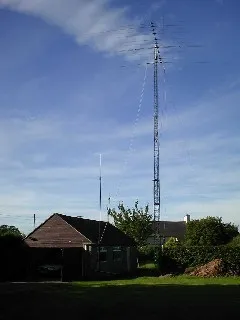
Photo: Mike Farmer, CC BY-SA 2.0, via Wikimedia Commons
There is a particular kind of knock at the door that every aerial-owning radio hobbyist learns to recognise. It is not the Amazon driver. It is not the meter reader. It is the neighbour who has spent three weeks staring at the thing above the gutter and has finally decided to ask what on earth it is doing there.
For years, that conversation was left to the individual member. You either handled it well, handled it badly, or spent a fortnight drafting a letter to the council in your head while pretending to be out. In 2026, though, more UK clubs are treating aerial diplomacy as a clubroom skill rather than a private misfortune. The result is a quiet little revolution in how hobbyists talk to the people who share their streets, their buildings and their parish noticeboards.
It Usually Starts With a Polite Knock
The first thing clubs tend to teach is that the knock is not automatically a declaration of war. Most neighbours are not anti-aerial. They are anti-uncertainty. They want to know whether the mast is safe, whether it will come down in a gale, whether it will affect their television, and whether anyone asked permission before it went up.
A club in the north of England now runs a short session once a term called, with tongue firmly in cheek, 'Aerial Neighbours'. Members bring along the sorts of questions they have actually faced. The answers are less about technical brilliance and more about plain English. What is it made of? How is it fixed? Who installed it? Does it need maintenance? What happens if it fails?
That sounds obvious, but the instinct for many radio hobbyists is to answer a simple question with a lecture on wavelengths. The club's advice is blunt: save the theory for the clubroom. At the front door, brevity is a form of diplomacy.
Paperwork Is Cheaper Than a Planning Appeal
The second lesson is that paperwork, handled early, is often the cheapest form of peacekeeping. Clubs are building small libraries of template letters: one for a neighbour who has raised concerns, one for a landlord who wants written assurances, and one for a parish councillor who has asked whether the aerial is 'allowed'.
The letters share a few sensible traits. They are short. They avoid jargon. They set out what the installation is, who put it up, and how it is maintained. They offer a named contact and an invitation to talk. Crucially, they do not sound as though they were written by someone who has already decided the neighbour is the enemy.
On planning, clubs are careful not to play lawyer. The basics are familiar enough: many domestic aerials benefit from permitted development rights, but those rights are not universal. Flats, rented properties, listed buildings, conservation areas and areas covered by Article 4 directions can all change the picture. A club can point members towards the right questions and the right local authority contact. It should not promise that a particular installation is automatically fine.
The template is a starting point, not a magic wand. The real value is that it gets a calm, factual reply through the letterbox before a small worry hardens into a formal complaint.
The Open Evening That Isn't Really an Open Evening
Then there is the neighbour open evening. The phrase sounds grander than the reality. In most cases it means a Saturday afternoon, a few chairs, a kettle and a member willing to show a curious neighbour what a radio station actually looks like.
The best versions are deliberately low-key. This is not a recruitment drive. It is not a chance to demonstrate every mode in the shack. It is a chance to let someone see that the aerial is connected to a person, not a mystery. Clubs often keep the visit short, offer tea, and explain the receive side of things as much as the transmit side. If a neighbour is worried about interference, a simple demonstration of what the equipment does and does not do can be worth more than a dozen letters.
The unwritten rule is that the hobbyist does the listening. The neighbour gets to ask the questions. The club's role is to make sure the member does not turn a fifteen-minute chat into a ninety-minute seminar on propagation.
The Skills That Travel Home
What is striking is how often the clubroom has already taught these skills. Committee nights, rally organising, repeater rota wrangling and the delicate business of sharing a village hall all require the same basic toolkit: patience, plain language and the ability to disagree without making it personal.
Some clubs now run informal role-play sessions, though they would never call them that. A member plays the neighbour. Another plays the landlord. Someone else plays the parish councillor who has received a single complaint and wants to be seen to be doing something. The exercise is not about winning the argument. It is about finding the sentence that lowers the temperature.
That might mean saying: 'I understand why you asked. Let me show you how it is fixed.' It might mean admitting that the aerial could be moved a couple of feet if that genuinely solves the problem. It almost never means saying: 'I have been licensed since before you were born.'
The Unwritten Rules of Defusing a Row
Clubs that have been through this tend to converge on a few practical habits.
- Answer the door. Avoidance makes the aerial look guilty.
- Keep a simple record of what was installed, when, and by whom.
- Tell neighbours before making a visible change, not after.
- Offer a compromise that costs little but signals good faith.
- Involve the committee or a calm clubmate early, rather than letting one person carry the whole row.
- Never gossip about the neighbour on the club net. Word travels further than any VHF signal.
None of this guarantees a happy ending. Some disputes are about planning law, some are about landlords, and some are about a neighbour who simply dislikes the look of a mast. But clubs are finding that the earlier the conversation starts, the less likely it is to end up in a council inbox.
Aerial diplomacy is not glamorous. It does not make for a thrilling logbook entry. It is, however, increasingly part of what a good club does: helping members stay on the air without turning the street into a battlefield. And if it takes a template letter, a plate of biscuits and a well-timed cup of tea, that is a price most clubs are happy to pay.