Logbook Nights: What Happens When a Radio Club Leaves the Mic Alone
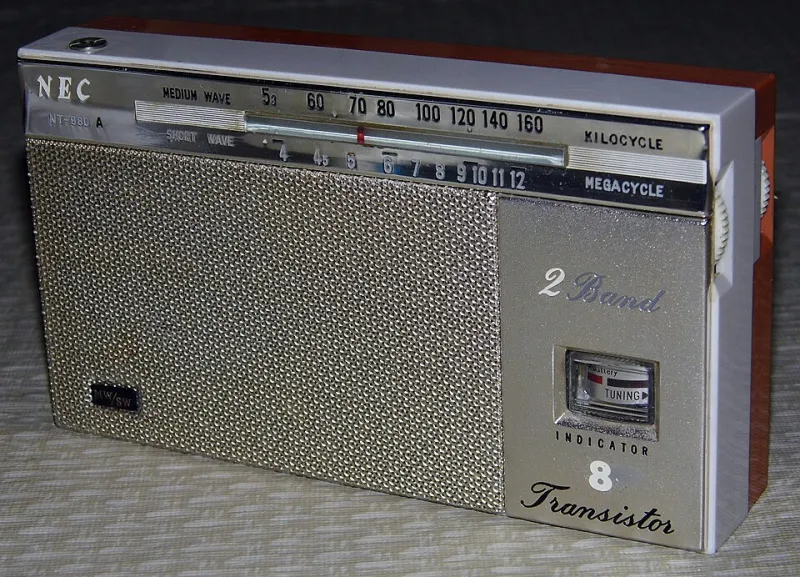
Photo: Joe Haupt from USA, CC BY-SA 2.0, via Wikimedia Commons
There is a particular sound to a radio club that has decided, for one evening at least, not to talk. The kettle clicks off. Someone uncoils a wire across the back of a chair. A portable radio is tuned slowly past a wash of static, and the room goes quiet in that concentrated way usually reserved for the last over of a cricket match.
Welcome to the listening night. Over the past year or so, a growing number of UK clubs have added a shortwave listening session to their calendars. It is not a contest, not a lecture, and definitely not a replacement for the usual club net. It is simply a night when members leave the microphone alone and see what the bands are doing.
The format is deliberately loose
Most listening evenings follow a similar shape. The hall opens, the urn goes on, and someone pins a few sheets of paper to the noticeboard: frequencies, times in UTC, target areas and a rough idea of what propagation might allow. Members then scatter into small groups, each with a radio, a notebook and a reasonable supply of biscuits.
The first half hour is usually chaos. One person has brought a new loop aerial and cannot find the adapter. Another is convinced the clubroom's LED lighting is wiping out everything below 10 MHz. Someone else has a schedule printed from a website and is reading it upside down. Then the room settles, the headphones go on, and the real work begins: listening.
Some clubs run a loose theme. It might be English-language broadcasts from Europe, or religious stations from North America, or the peculiar pleasure of finding a low-power station that nobody else can hear. Others keep it open. The only rule is that if you find something interesting, you write it down and tell someone else before the next brew round.
What people actually listen to
Shortwave broadcasting in 2026 is not the wall-to-wall dial of the 1980s. It is sparser, more erratic and often more interesting for exactly that reason. A listening night might start with the BBC World Service, move through RTE or Radio Romania International, and end with a faint signal from WRMI or Channel 292 that appears for ten minutes and then vanishes into the noise.
That is the appeal. Unlike a contact on the ham bands, a shortwave broadcast does not need you to reply. You are not exchanging signal reports or filling in a log for an award. You are simply trying to hear what is being sent, from where, and under what conditions. It is radio as a window rather than a conversation.
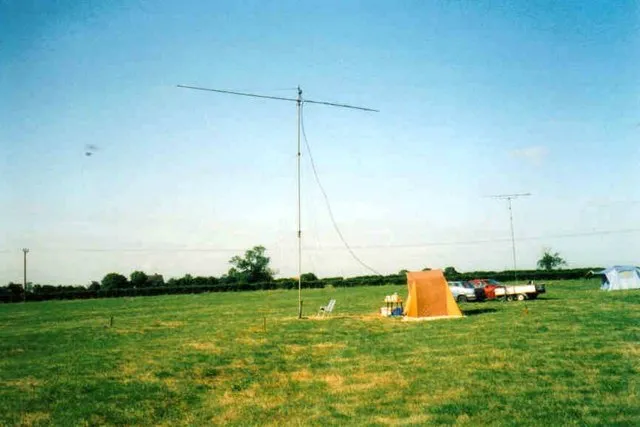
For newcomers, that can be liberating. There is no pressure to press the PTT, no fear of getting a callsign wrong, and no need to understand the inner workings of a transceiver before you can join in. A modest portable with a telescopic whip is enough to start. A simple longwire thrown over a hedge will do more. A cheap SDR dongle and a laptop can turn a clubroom table into a spectrum display that would have seemed like science fiction a generation ago.
Gear, noise and the great aerial debate
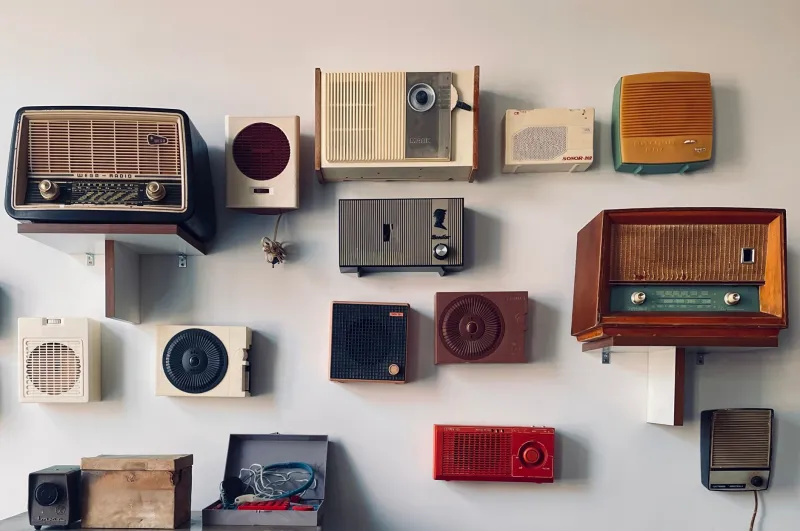
The equipment side of a listening night is half the fun. Members bring all sorts. One table might hold a classic portable from the 1990s, still working perfectly and still hated by its owner for eating batteries. Another might have a modern SDR running into a laptop, with a waterfall display showing signals as thin bright lines. Somewhere in the corner there is usually a magnetic loop aerial, carefully rotated to null out a nearby mains hum.
Noise is the great leveller. A clubroom in a village hall can be a difficult place to listen. Fluorescent lights, phone chargers, broadband routers and the fridge in the kitchen all contribute their own little sermons of interference. Members quickly learn the tricks: switch off what you can, move the aerial away from the building, use a battery-powered radio rather than mains power, and keep a pair of headphones handy so the room's chatter does not drown out a weak signal.
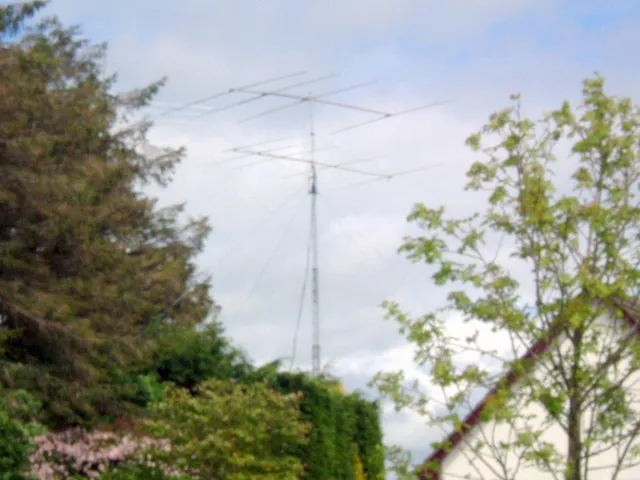
The aerial debate never ends. One member swears by a random wire. Another insists a well-made loop is the only sensible choice for a noisy urban site. Someone will always mention the dipole they put up in 1987 and have never bettered. The joy is that these arguments are not really arguments. They are working conversations, tested in real time against whatever the ionosphere is doing that evening.
Why listening is bringing people back
Club life has changed. Many clubs report that the traditional business meeting is a harder sell than it used to be. People are busy, halls cost money, and the idea of sitting through a treasurer's report on a Tuesday night is not everyone's idea of a hobby. A listening evening offers something different: a reason to turn up, a task to do, and a result you can share.
It also lowers the barrier. You do not need a licence to listen. You do not need expensive gear. You do not need to be confident on the mic. A teenager with a cheap SDR and an interest in foreign languages can sit next to a retired engineer with forty years of logs, and both can learn something. That mix is healthy for any club.
There is a social side too, of course. Logs are compared. Frequencies are swapped. Someone claims to have heard a station that nobody else can find, and is politely doubted until the signal returns. The biscuit budget takes a predictable hit. By the end of the evening, the whiteboard is covered in scrawled times, frequencies and question marks, and someone is already suggesting a theme for next month.
A quiet kind of club night
Listening nights will not suit every club. Some members join for the construction, some for the contests, some for the chat. But for clubs looking to widen their appeal, the shortwave evening has a lot going for it. It is cheap to run, easy to explain and genuinely different from a normal meeting.
Best of all, it reminds everyone why radio matters in the first place. Not because it is a technical puzzle to be solved, or a contact to be logged, but because somewhere out there a transmitter is sending a signal into the dark, and a room full of people in a UK village hall is trying to catch it. That is a good night out by any standard. Bring a notebook, bring a radio, and bring a spare pair of batteries.