Boots On, Squelch Off: The Sunday Ramble Net Taking UK Clubs Outdoors
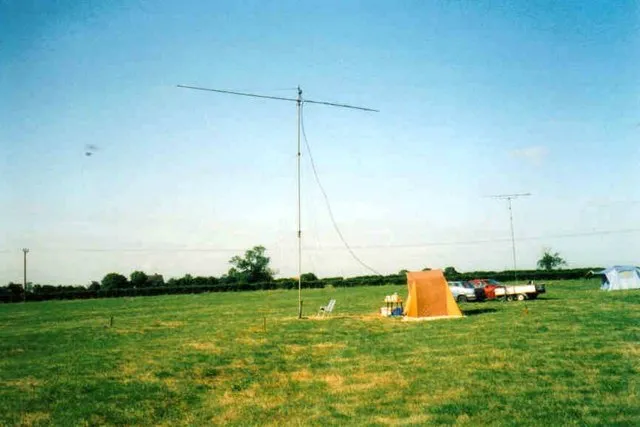
Photo: Les Harvey, CC BY-SA 2.0, via Wikimedia Commons
Sunday morning used to mean a slow start, a pot of tea and the familiar crackle of the club net from the shack. In 2026, it increasingly means lacing up a pair of boots, clipping a handheld to a rucksack strap and hoping the squelch holds out long enough to reach the next gate. The club ramble net — part walk, part radio exercise, part social outing — has become one of the friendlier trends in UK amateur radio. It is not a contest, it is not a formal event, and nobody is going to mark you down for a slightly ragged signal report. That, frankly, is the point.
The net that walks
At its simplest, a ramble net is a scheduled Sunday-morning check-in on 2 metres or 70 centimetres, with members spread along a walking route rather than sitting in a hall. Some clubs run a single group walk with a handheld at the front and back; others split into pairs, agree a meeting point and use the radio to keep in touch. A few have turned it into a monthly fixture with a short route for families, a longer route for the keen, and a pub at the end for everyone.
The appeal is obvious. It gets members outside, it gives handhelds a real-world workout, and it attracts people who like the idea of radio but are not quite ready to spend a whole evening discussing coax loss. It also has a faintly nostalgic feel. Walking and talking on radio is hardly new — hill-topping and portable operation have been part of the hobby for decades — but the club ramble net packages it in a way that feels welcoming rather than technical.
Route planning is half the radio
A good ramble net starts with a map, not a microphone. Clubs tend to favour circular routes of three to six miles, with plenty of gates, benches and obvious regrouping points. Ordnance Survey maps or a reliable mapping app are standard kit, and someone usually has a paper copy in a rucksack pocket as backup. In England and Wales, clubs need to think about public rights of way, permissive paths and any local closures. In Scotland, the access code gives more freedom, but the same courtesy applies: leave gates as you find them, keep to paths where crops are growing, and do not turn a quiet lane into a makeshift radio rally.
Route length matters less than pace. A ramble net with a mix of ages and fitness levels needs a designated back marker, a front marker and an agreed turnaround time. Some clubs publish a simple route card with grid references, a meeting point and a rough timetable. Others keep it loose: meet at the car park, walk, talk, regroup at the top. Both work, provided nobody is left wondering whether the net has moved on or the batteries have died.
Licence, etiquette and the awkward silence
Licensing is straightforward, but it is worth stating plainly. Foundation, Intermediate and Full licensees can all operate handhelds within the terms of their licence, and club ramble nets generally use 2 metres and 70 centimetres because those bands suit short-range portable work. The usual rules apply: identify clearly, keep transmissions short, and avoid hogging the frequency. A ramble net is not the place for a twenty-minute monologue about the merits of one antenna over another. Save that for the pub.
Etiquette is where things get interesting. A walking net has gaps — sometimes long ones. Members disappear behind a hedge, a hill blocks the signal, or someone stops to admire a view and forgets to press the button. The temptation is to fill the silence with repeated calls. Better practice is to agree a check-in rhythm: every fifteen minutes, at each major junction, or when the group splits. If someone misses two check-ins, the back marker or net control should try a direct call before assuming the worst. Nine times out of ten, it is a dead battery or a wrong channel, not a mountain rescue.
Testing handhelds where the map says “marsh”
One of the quiet pleasures of the ramble net is that it turns handheld performance into a real conversation. A stock rubber duck that works fine in a car park can struggle behind a wet hillside. Members quickly learn which antennas are worth the extra length, which batteries dislike the cold, and why a waterproof bag is not optional in a British autumn. It is equipment chat with mud on its boots.
Some clubs use the outings to compare 2-metre and 70-centimetre coverage, try a slim Jim in a tree, or test whether a particular handheld really does cope with a damp pocket. Nobody needs a lab. A few honest signal reports from different points on the route tell you more than a spec sheet. And because the net is social, the findings get shared back at the pub or in the club newsletter — practical knowledge passed round with the chips.
The pub stop is not an afterthought
The pub stop is where the ramble net becomes a club outing rather than a radio exercise. A table by the fire, a round of drinks and a few packets of crisps do more for member retention than a dozen formal meetings. It is also where the quietest newcomer gets a chance to ask questions without feeling like they are interrupting a committee session. Clubs that run ramble nets often report the same thing: the walk gets people through the door, but the pub keeps them coming back.
A little planning helps. Ring ahead if the group is large, check opening times, and remember that not everyone drinks. A café or village hall can work just as well. The point is the pause, not the pint.
What to bring, and what to leave at home
A basic ramble net kit is refreshingly small: a charged handheld, a spare battery or power bank, a waterproof jacket, water, a map and a sense of humour. A lightweight antenna upgrade is nice but not essential. Leave the linear amplifier at home. Leave the heavy coax reel too. This is not a field day; it is a walk with radio.
Clubs should also agree on a simple safety plan. Share the route, nominate a contact who is not walking, and make sure everyone knows the meeting point and finish time. It is not overkill. It is just good clubmanship.
A net with mud on its boots
The ramble net will not replace the village hall. It does not need to. But as clubs look for ways to keep members active, attract new people and give handhelds a proper purpose, a Sunday walk with a radio on the shoulder is a remarkably good fit. It is cheap, it is sociable, and it gets people talking — sometimes about antennas, sometimes about the weather, and occasionally about whether the pub does a decent roast. In 2026, that feels like exactly the kind of net a club can build on.