Saving the Sound of AM: UK Clubs Build a Listening Archive Before the Band Falls Silent
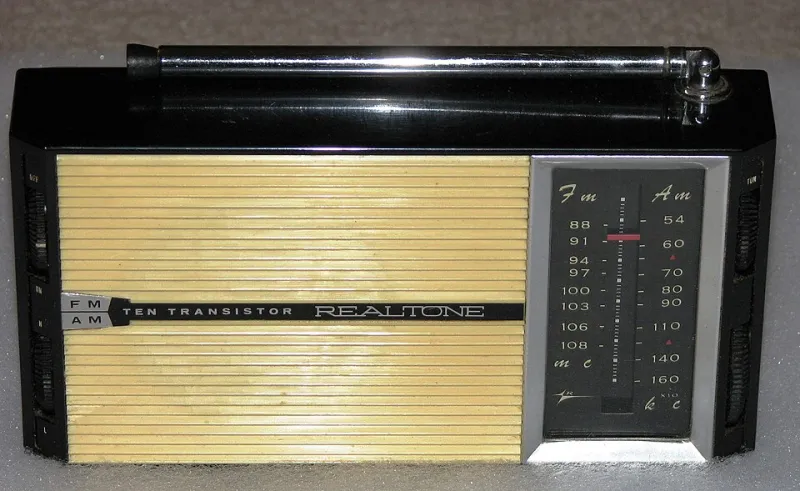
Photo: Joe Haupt from USA, CC BY-SA 2.0, via Wikimedia Commons
Saving the Sound of AM
There is a beautiful sort of stubbornness to medium wave. In 2026, the AM band can feel like a car boot sale on a rainy Sunday: half-forgotten, slightly crackly, and full of things you did not know you would miss until they are gone. For a certain kind of UK radio listener, that is exactly the point. As local services continue to leave AM, clubs up and down the country are organising listening nights that are part nostalgia session, part rescue mission.
The idea is simple enough. Members bring receivers, aerials, notebooks and recorders, then spend an evening tuned to whatever local and regional stations are still hanging on. The best bits — station idents, travel bulletins, late-night dedications, the odd football update — are logged and, where possible, archived. It is not just about saving a few jingles for a rainy day. It is about keeping a record of how local radio sounded while it was still local.
Why medium wave still matters to club listeners
AM radio has a texture that digital platforms struggle to imitate. There is the fading, the interference, the way a signal can wobble when a streetlight clicks on. For club archivists, those imperfections are part of the historical record. A travel bulletin read over a poor phone line tells you something about the transmitter, the studio, the weather and the staffing levels all at once.
Helen Marsh, an archivist with the Waveney Broadcast Circle, says the group started recording AM output almost by accident. “We were already meeting to listen to distant stations,” she explains. “Then one member brought a cassette of a local breakfast show from the 1980s and we realised nobody had a copy of the station’s travel jingle. That started a rather obsessive spreadsheet.”
The club now runs monthly listening nights with a deliberate archive focus. Members are asked to note the frequency, time, station name, transmitter site where known, programme type and receiver used. Even a short recording of a late-night dedication can be useful if the metadata is good. “A clip without context is just a noise,” Marsh says. “A clip with a date, frequency and programme name is a door into the past.”
Inside a listening night
A typical session is less glamorous than it sounds. There are extension leads, headphones, a shared flask and a lot of polite disagreement about whether the loop aerial should be nearer the window. One member might be chasing a weak regional station; another is recording a local travel bulletin on the hour. Someone else is quietly updating the club spreadsheet.
The best clubs treat the evening like a field recording trip. They keep a master log in a shared document, back up files before members leave, and use file names that make sense to someone who was not there. “We use the date first, then the station and programme,” says Dev Patel of the Pennine Radio Society. “Something like 2026-11-08_StationName_TravelBulletin. It is not poetic, but it works.”
Patel’s group has also started inviting members to donate old recordings rather than just make new ones. Minidiscs, cassettes, reel-to-reel tapes and early digital files all arrive with stories attached. The club checks the media, transfers what it can, and returns the originals. The archive is not a cupboard full of unlabelled boxes; it is a living catalogue.
How recordings become an archive
For clubs starting out, the practical steps matter more than the romance. Record in a lossless format if you can — WAV or FLAC rather than a compressed phone memo — and keep the original file untouched. A 16-bit, 44.1 kHz recording is perfectly usable for most broadcast material, while 24-bit gives a little more headroom for quiet AM signals. Avoid heavy noise reduction at the capture stage; it is better to preserve the hiss and clean a working copy later.
Storage is the next hurdle. The 3-2-1 rule is a good starting point: three copies, on two different types of media, with one copy off-site. A club server, an external drive and a cloud backup for the catalogue can work well. Checksums and a plain-text index are unglamorous but invaluable. So is a simple donation form that records who made the recording, when, and what permissions they can offer.
Receivers do not need to be exotic. A decent portable with a ferrite rod, a communications receiver with a long wire, or an SDR with an upconverter can all produce useful results. The real skill is in reducing local noise: switch off LED lamps, move away from routers and phone chargers, and use a battery-powered receiver where possible. A quiet receiver in a quiet room will often beat an expensive set next to a noisy mains supply.
Sidebar: The ethics of recording and sharing
Recording broadcast material for personal listening is one thing; publishing it is another. Broadcast copyright usually belongs to the station or the programme maker, and clips can include music, scripts and performances owned by others. Clubs should be cautious about uploading full programmes or long music sequences. Short excerpts for criticism, review or archival study may be defensible in some circumstances, but that is not a blanket permission. Get consent where you can, credit the station and programme, and keep a record of any requests to remove material. Be especially careful with late-night dedications and phone-ins, which can contain personal details. A good archive respects the people who were on air as well as the sound of the station.
For RadioClubs UK readers, the message is straightforward: if your club already meets to listen, add a log sheet and a recorder to the table. If you have old tapes in the loft, do not bin them. Ask a local club to assess them. The AM band may be getting quieter, but the archive does not have to be.