Salt in the Coax: Why Britain's Seaside Clubs Come Alive When the Nights Draw In
There is a particular noise a longwire makes in a Force 7. Strictly speaking the wire itself is silent — it is the halyard, the greenhouse panel, the fence post doing the rattling — but the point stands. Coastal listening is a full sensory experience, and every winter a stubborn few hundred UK hobbyists drive towards the sea to get it.
The shack at the end of the lane
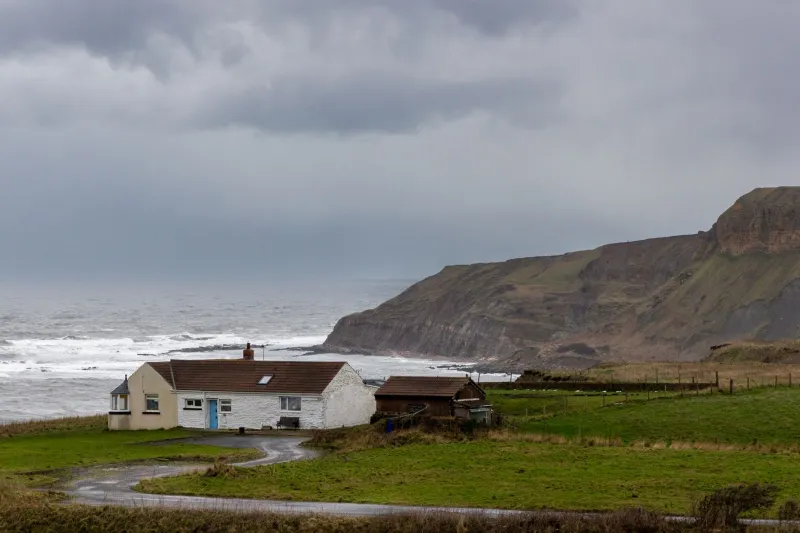
Seaside radio clubs are not a single species. Some are proper brick-and-mortar outfits with a rented room, a kettle rota and a framed charter on the wall. Others are closer to weather events with a membership secretary: a converted net loft above a harbour, a caravan with a woodburner and a mast strapped to the towbar, a shipping container bolted to a concrete pad just above the high-water mark.
What unites them is geography. A club with a clear western horizon has something a Midlands club can only dream about, and members know it. The tradition runs deep, too — the cliffs at Poldhu were sending signals across the Atlantic more than a century ago, and there is something quietly pleasing about a modern SDR sitting within sight of that history, doing very much the same job with better filtering.
Cornwall gets the romance, but the map is broader than that. Walney Island, the Lancashire and Lincolnshire flats, Winterton-on-Sea, the Suffolk shingle, Dungeness, Portland Bill, the Ardnamurchan peninsula, bits of Orkney and Shetland. Each has its own micro-culture, its own preferred band and its own strongly held opinion about whether a beverage antenna counts as a hobby or a landscaping project.
What salt does to a hobby
Ask any coastal club secretary what eats the budget and you will not hear about receivers. You will hear about consumables.
Salt air is relentless. It creeps into PL259s, works its way under insulation tape and turns a perfectly respectable N-type connector into a green-tinged archaeological find by February. Masts that were galvanised in the spring look tired by Christmas. Guy ropes go stiff, silicone goes chalky, and any aluminium that was not properly treated develops a personality.
So coastal clubs have developed habits. Stainless hardware where it can be afforded. Dielectric grease applied with more religious conviction than strictly necessary. Self-amalgamating tape over the top of everything, then a second layer because someone once had a bad experience. An annual re-termination day in early autumn that doubles as a social occasion and a sausage-based apology for the state of the tea urn.
One Lincolnshire group maintains what members cheerfully call the corrosion box — a plastic crate of sacrificial connectors, offcuts and half-used tubes that gets raided every November. It is not glamorous. It is, however, the reason their antenna still works in January.
Why the sea, and why winter
Two things happen at the coast. The first is the horizon: a low, unobstructed view to the west is worth an enormous amount on medium wave, because it is the direction most transatlantic signals arrive from. The second is the ground. Seawater is about as close to a perfect conductor as a hobbyist is ever going to get, and sites near tidal estuaries, salt marsh or open coast get a genuine boost in ground conductivity that inland gardens simply cannot match.
Then there is the season itself. Winter is the classic medium-wave window for good reason. Thunderstorm static — the great enemy of summer listening — fades away. Nights are long, which matters when you are chasing distant signals, and the greyline at local sunrise and sunset produces those short, delicious enhancements where a station that was mush at four o'clock is suddenly readable at half past.
Solar conditions in the 2026-27 season are a talking point in themselves. Cycle 25 is well past its peak now, and we are heading gently downhill towards a quieter period later in the decade. For medium-wave night-time work that is broadly welcome news: calmer geomagnetic conditions, fewer sudden disturbances, more evenings where the band behaves predictably. Higher bands may be duller than they were two years ago. Nobody chasing Dutch and German stations after dark will be complaining.
Practical kit notes for the coming season
A few things worth doing before the January field days:
- Terminate everything twice. Re-make connectors before the season rather than during it. Grease, tape, and photograph the joint so you know what you did last year.
- Respect permissions. Beach car parks, nature reserves and National Trust land all have rules, and coastal clubs have learned the hard way that a polite letter in September beats an argument in December. Public liability cover and a written risk assessment open more doors than enthusiasm alone.
- Keep it light. Loops and compact flags travel better than a 300-metre beverage, and a club that can set up in twenty minutes in a lay-by will actually do it, rather than talking about it.
- Log properly. A paper notebook survives a dropped flask. Note the time, the aerial, the receiver, and the weather. Future you will be grateful.
- Share the driving. Winter coastal trips are more fun with three people, a flask and a rota.
Club nights with a sea view
What keeps these groups going is not the DX. It is the rhythm of them. A monthly meeting in a village hall smelling faintly of brine and biscuits. A minibus trip to a headland for a sunrise session. A January quiz where the tie-break question is about the wavelength of a forgotten offshore station. A club that lends a newcomer a spare receiver and a copy of the band plan, then stands back while they log their first North American signal.
Those are the evenings people remember, and they are the reason a converted container above a Cornish beach still has a padlock on the door and a booking sheet on the wall. The salt gets into everything eventually. The clubs have decided that is a fair price.